
Termites in Brisbane do not advertise themselves. By the time most homeowners notice something is wrong, the damage has already been building for months, sometimes years. Knowing what to look for changes that. Here are the real signs, including the ones most people miss.
Why Most Termite Damage Is Hidden
The species responsible for most structural damage in Brisbane is the subterranean termite. These are ground nesting insects. They travel from their nest in the soil into the timber of your home through hidden galleries and mud tubes. They eat timber from the inside out, preferring to leave a thin shell intact on the outside.
This is exactly why you can have an active infestation for a long time without noticing it. The wall looks fine. The floor looks fine. But behind the surface, the structural timber is being hollowed out.
Annual inspections by a licensed technician, carried out to the Australian Standard AS 3660.2, are the only reliable way to catch termites early. But knowing the signs gives you a better chance of catching something between inspections.
The Six Signs to Look For
1. Mud Tubes
Mud tubes are tunnels built from soil, termite saliva, and faecal matter. They are roughly pencil thick and brown in colour. Termites build them on hard surfaces to travel between the soil and the timber they are eating. They maintain the moisture and darkness the colony needs to survive.
Look for them on foundations, concrete stumps, brickwork, garage walls, and the external face of subfloor timbers. Finding a mud tube is clear evidence of termite activity. Even an empty or dry tube indicates past activity and warrants an inspection.
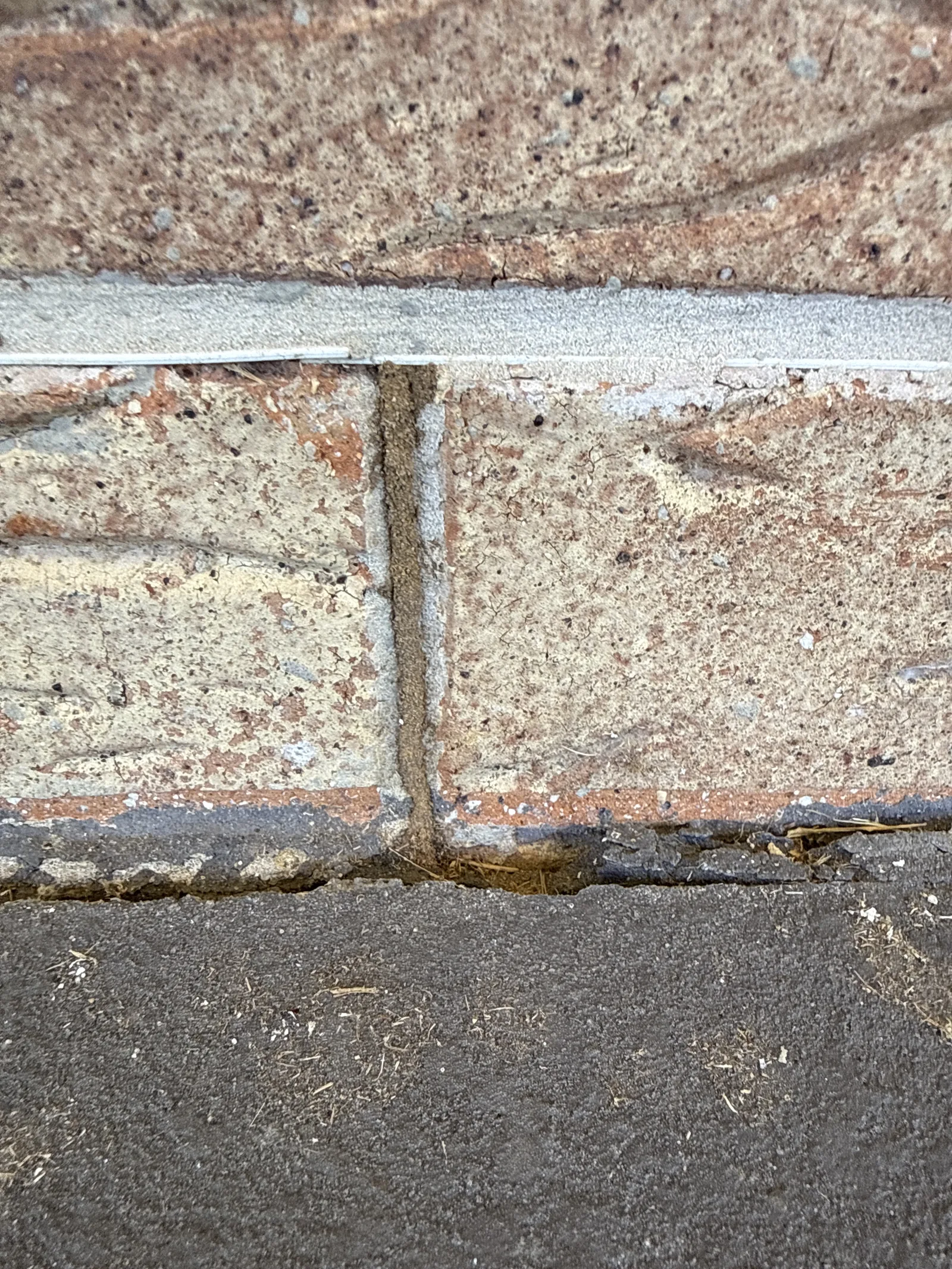
Mud tube on brick wall — slab junction entry point
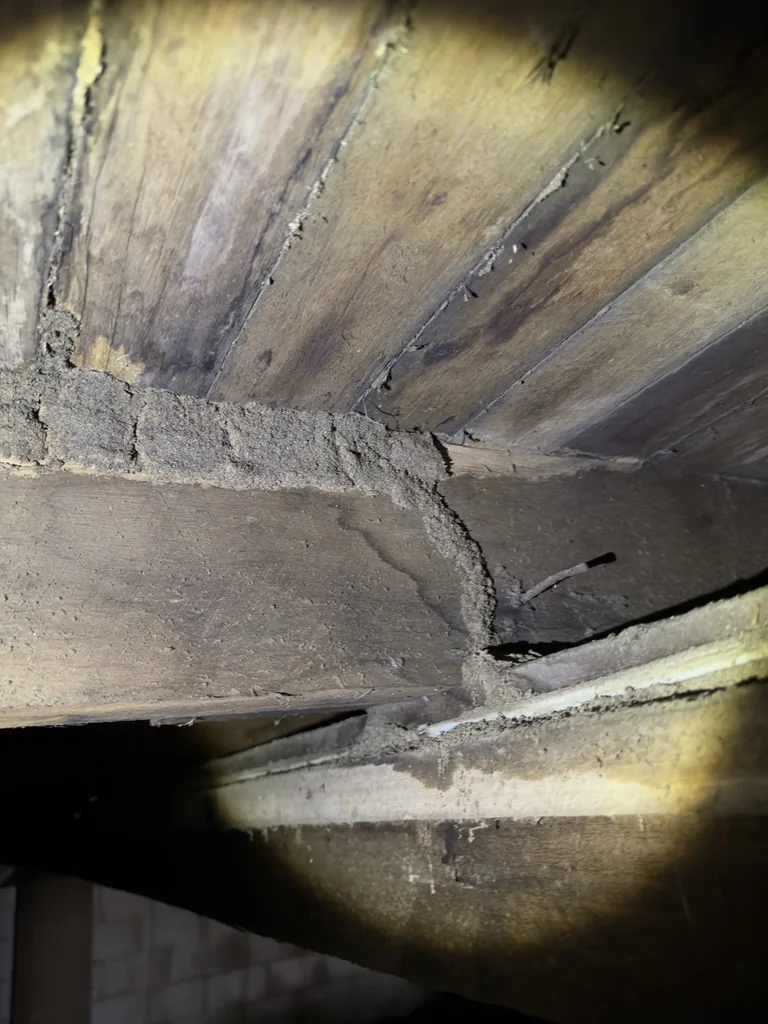
Mud leads along subfloor bearers — found during inspection
2. Timber That Sounds Hollow
Use the back of a screwdriver handle or your knuckle to tap along skirting boards, door frames, and floor timbers. Healthy timber gives a solid thud. Termite damaged timber gives a hollow, papery sound. That is because the interior has been eaten away and only a thin shell remains.
This test is most useful along skirting boards at floor level, around door and window frames, and on exposed subfloor timbers. A hollow sound does not always mean termites. But it always means something worth investigating.
3. Doors and Windows That Stick
Termites release moisture as they work. This moisture affects the timber surrounding them. Door and window frames can swell or distort as a result, causing doors and windows to become stiff, tight, or difficult to close properly.
Most people put this down to the weather or the season. In Brisbane, timber movement after rain is common. But if a door or window that used to close easily has started sticking in a dry period, or if multiple frames are affected at once, it is worth getting it checked.
4. Frass (Termite Droppings)
Frass is termite excrement. It looks like tiny granules or pellets, often pale in colour, ranging from cream to dark brown depending on what the termites have been eating. You may find small piles of it beneath exit holes in timber or in the roof void.
The subterranean termites most common in Brisbane tend to incorporate their droppings back into their workings rather than expelling them. But frass is more commonly seen from drywood termite species, which are less prevalent but present in some parts of South East Queensland. Either way, finding it warrants a call.
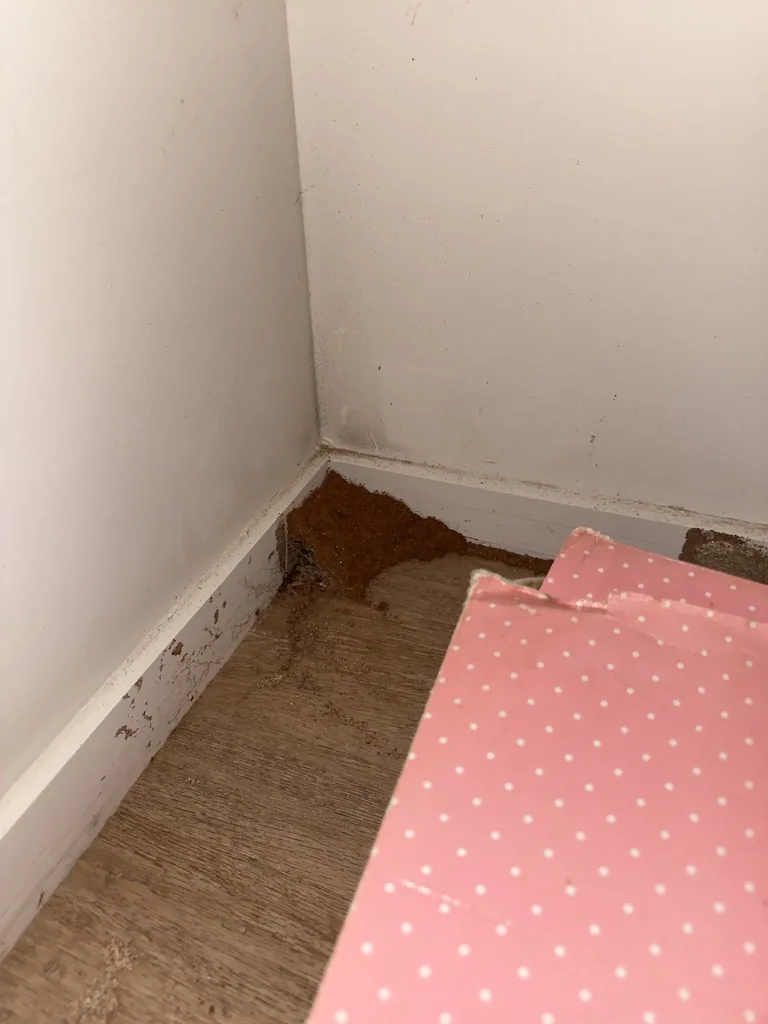
Frass and mud deposits at skirting board base — active termites breaching into the room
5. Flying Termites (Alates)
Flying termites, known as alates, are the reproductive members of a mature termite colony. When a colony is well established, it produces winged termites that swarm to start new colonies. In Brisbane this typically happens from November through to March or April, often on warm humid evenings after rain.
Alates are frequently mistaken for flying ants. The difference: termites have straight antennae, a thick waist, and two pairs of equal length wings. Flying ants have bent antennae, a narrow pinched waist, and unequal wing lengths.
Seeing a swarm near your home means there is an established colony in the area. That colony may already be in your property or in a tree, stump, or structure close by. It should not be ignored.
6. Discarded Wings
After alates land, they shed their wings. You might find small piles of equal length wings on windowsills, at doorways, near lights, or on the floor. This is one of the most overlooked signs of termite activity because the wings are small and easy to sweep up without a second thought.
A pile of discarded wings is strong evidence that a swarm occurred near or inside your property. If you find wings and have not seen a swarm, it means the swarming happened when you were not watching. Either way, call a technician.
What NOT to Do When You Find Termites
This part matters. A lot of the calls we receive are from homeowners who found something, panicked, and made the situation harder to deal with.
Do Not Do Any of the Following
- Do not spray the area with surface spray, insecticide, or any chemical
- Do not break open the mud tube or disturb the active workings
- Do not seal the area with silicone, putty, or any filler
- Do not flood the gallery with water
- Do not remove affected timber before a technician attends
- Do not wait to call if you suspect live activity
Here is why these things matter. Termite colonies are not isolated to the spot you can see. The mud tube or the bit of damaged timber you found is the visible end of a network that can extend through multiple walls, into the subfloor, and back to a nest that could be tens of metres away.
When termites are disturbed or detect a repellent chemical, they retreat. The colony does not die. It moves deeper into the structure and seals off the entrance you found. The technician now has a much harder job locating where the activity has moved to. In some cases it can take weeks for the colony to surface again at an accessible point.
The best thing you can do is leave the area alone and call immediately.
What to Do Next
If you have seen any of these signs, the next step is a professional inspection. A licensed technician with thermal imaging and detection equipment will be able to tell you whether there is active activity, where it is concentrated, how extensive the damage appears to be, and what treatment options are appropriate.
The sooner a confirmed infestation is treated, the less damage is done. Every week that passes is another week of feeding.
Found Something? Call Us Today.
If you have found what you think are termites, do not disturb them. Call 0422 334 204 immediately. We offer same day response for active termite situations across Brisbane and the Sunshine Coast.